
Ingredient guide
Urolithin A
What does research say about urolithin A, mitophagy and muscle function? Explore its food precursors, the limitations of human trials and what supplement labels can—and cannot—tell you.
Read the human evidence ↓What is urolithin A?
Urolithin A is a compound that certain gut microbes can make from ellagic acid and ellagitannins found in foods such as pomegranate, walnuts and some berries. It is a microbial metabolite, not a vitamin or an essential nutrient.
Not everyone produces the same amount of urolithin A after eating these foods. Conversion depends partly on the composition and activity of the gut microbiota; eating a pomegranate is not equivalent to taking a measured amount of isolated urolithin A.
Which foods are linked to urolithin A?
Pomegranate, walnuts and some berries contain precursor compounds such as ellagitannins. They do not necessarily provide a predictable dose of urolithin A itself.
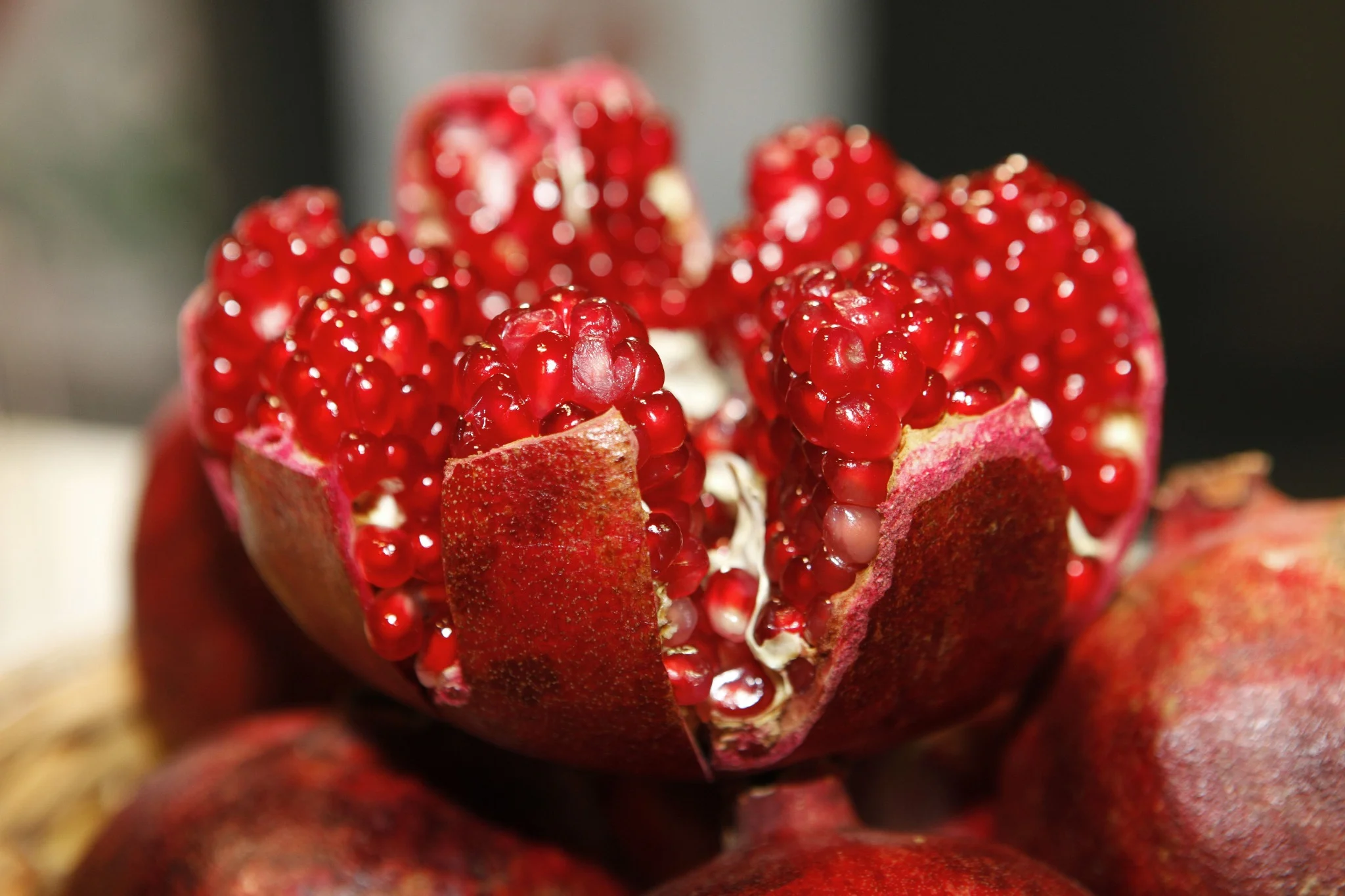
Whole foods can contribute fibre and other nutrients regardless of how much urolithin A an individual produces. There is no validated food-serving conversion into a supplement dose.
Urolithin A and mitophagy
Mitophagy is a cellular process involved in identifying and recycling damaged mitochondria. Urolithin A has been investigated for its ability to influence mitophagy-related pathways, especially in laboratory and animal models.
A change in a molecular pathway is not proof of longer life, stronger muscles or improved health in people. Human studies are needed to establish whether these mechanistic signals translate into meaningful outcomes.
What do human trials show?
Human clinical evidence is promising in some individual measurements but remains limited and inconsistent. A 2026 systematic review and meta-analysis included five small randomised trials (236 participants). Only two trials could be pooled for the six-minute walk test, and the combined result was not statistically conclusive.
Other outcomes, including muscle endurance, strength and mitochondrial-related biomarkers, were measured differently across short studies. Some individual findings were favourable, but they cannot yet establish a reliable clinical benefit or anti-ageing effect. Most trials lasted only weeks to months.
Skin elasticity, “cellular renewal” and lifespan extension should not be presented as proven benefits of oral urolithin A.
What amounts have been studied?
Randomised human trials have commonly investigated 500 mg or 1,000 mg daily, depending on the population and study design. These are research doses, not recommended intakes. Neither an established nutritional requirement nor an evidence-based optimum daily dose exists.
Study protocols also differ in duration and participant characteristics, so comparing two labels by milligrams alone does not establish which preparation is more effective.
Safety and market rules
Published short-term trials provide some tolerability information, but they do not establish long-term safety for every population or combination with medicines. People who are pregnant, breastfeeding, managing a medical condition or taking regular medication should not treat early study results as a personal recommendation.
EU and UK market status matters. In the EU, urolithin A appears in the European Commission's public summary list of novel-food applications, but it is not listed in the current Union list of authorised novel foods. In Great Britain, the Food Standards Agency lists urolithin A as an application still in risk assessment. In practice, that means isolated urolithin A should not be treated as an authorised EU supplement ingredient at this stage, and authorisation in one market does not automatically apply in another. In the United States, the FDA issued a “no questions” response in 2018 to a GRAS notice for urolithin A in specified food uses; this is not a blanket FDA approval of urolithin A supplements.
Other supplements linked to cellular energy
Urolithin A is not the only supplement ingredient studied in connection with cellular energy and muscle function. However, different compounds act through different biological pathways and should not be considered interchangeable.
Coenzyme Q10 (CoQ10) plays a role in mitochondrial energy production by transferring electrons within the respiratory chain. Although CoQ10 is part of normal cellular function, the benefits of supplementation in otherwise healthy adults remain uncertain.
Creatine helps replenish ATP during short, intense muscular activity. Unlike urolithin A, creatine has well-established evidence for improving performance during repeated bouts of high-intensity exercise.
Neither ingredient has been shown to reproduce the proposed mitophagy-related effects of urolithin A in humans.
Explore related guides: Coenzyme Q10 · Creatine
How to evaluate supplement labels
If comparing products sold in markets where they may legally be marketed, check the full ingredient name, labelled daily amount, serving size, other active substances and manufacturer information. Distinguish isolated urolithin A from pomegranate extract: the latter does not guarantee a particular urolithin A intake.
IngredientScope does not include a urolithin A product comparison at this stage. Because isolated urolithin A is not currently listed in the EU Union list of authorised novel foods, adding products would risk implying EU suitability that has not been confirmed.
EU health claim details
EU claims and novel-food status
No EU-authorised health claim for urolithin A has been identified in the sources reviewed for this guide. The European Commission publishes a public summary of a urolithin A novel-food application from 2018, but urolithin A is not listed in the current Union list of authorised novel foods.
A novel-food authorisation concerns specified safety and market conditions; it does not in itself establish a health benefit. Until authorisation status changes, isolated urolithin A should not be presented on IngredientScope as an established EU supplement ingredient.
Sources & regulatory references
- Dao et al. (2026): systematic review and meta-analysis of human muscle outcomes ↗
- Systematic review of urolithin A and ageing-related outcomes (2024) ↗
- European Commission: summary of novel-food applications ↗
- European Commission: urolithin A application summary (2018) ↗
- European Commission: Union list of authorised novel foods ↗
- UK FSA: urolithin A novel-food application status ↗
- US FDA: GRAS Notice No. 791 — Urolithin A (2018) ↗
- EFSA: novel-food application procedure ↗